
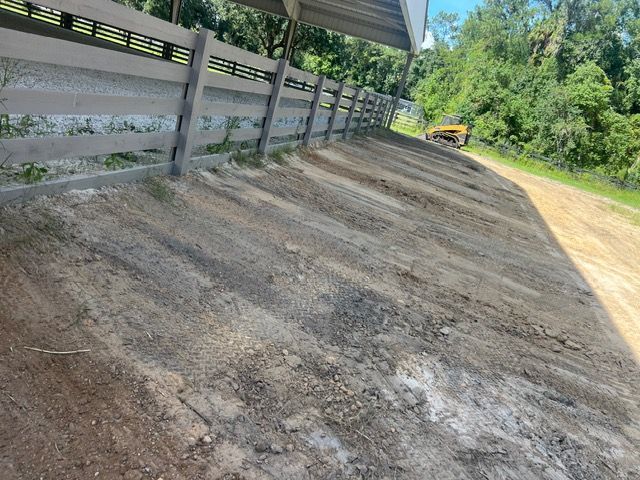
Boundaries That Define and Protect
Fencing Services in Saint Cloud and surrounding areas for properties requiring security, privacy, or clear boundary definition
Undefined property lines, lack of security around equipment or livestock, and insufficient privacy from neighboring properties create practical problems for residential, agricultural, and commercial sites. Fencing installation addresses these issues by creating physical barriers that mark boundaries, restrict access, and provide visual separation. Collins Clearing LLC coordinates fencing services in Saint Cloud and the surrounding Central Florida communities with clearing and site preparation work, so properties are ready for fence installation without overgrown vegetation or uneven ground complicating post placement and alignment.
Fencing projects begin with site assessment to determine fence line placement, post spacing, and material selection based on intended use—livestock containment requires different construction than decorative perimeter fencing or security barriers for commercial yards. Florida's weather conditions, including high winds, heavy rain, and intense sun exposure, affect material durability, so fencing solutions account for corrosion resistance, post anchoring depth in sandy soil, and gate hardware that withstands repeated use in humid conditions.
Discuss fencing goals and property requirements to determine the most functional design for your site conditions.
How Fencing Addresses Property Access Concerns
Fence installation involves setting posts at specified intervals, securing rails or panels between posts, and installing gates at access points. Post holes are dug to sufficient depth to prevent leaning or shifting in loose soil, with concrete anchoring used where ground stability is limited. Material selection depends on whether the fence serves decorative, functional, or security purposes—chain link provides visibility and airflow for commercial sites, while wood or vinyl fencing offers privacy for residential properties.
After installation, property boundaries are clearly marked, access is controlled through designated gates, and livestock or equipment remains contained within fenced areas. Properties that previously lacked defined borders now have visible separation from neighboring land, which reduces disputes and clarifies maintenance responsibilities. Fencing also improves property value by adding functional outdoor space that can be used for recreation, storage, or agriculture without concern for uncontrolled access.
Fencing projects often align with land clearing work, since removing overgrowth along fence lines ensures posts can be placed accurately and vegetation does not interfere with fence integrity. Properties with existing fences in poor condition benefit from replacement rather than repair when posts have rotted, panels have warped, or gate hardware no longer functions properly. Coordination between clearing, grading, and fencing ensures that the fence line follows the intended property boundary and remains level across varying terrain.
Answers to Frequent Service Questions
Fencing decisions depend on property layout, intended use, and long-term maintenance preferences, so understanding the installation process helps clarify what to expect.
What factors determine post spacing and depth?
Post spacing depends on fence material and intended load—livestock fencing requires closer spacing to support animal impact, while decorative fencing uses wider spacing, and post depth increases in sandy soil to prevent shifting during storms.
How does Florida weather affect fencing material selection?
High humidity, salt air in some areas, and intense UV exposure cause wood to rot and metal to corrode unless treated or coated, so material choice should account for moisture resistance and sun damage over time.
When should fencing be installed relative to other site work?
Fencing installation happens after clearing and grading are complete so that fence lines are accessible, post placement is accurate, and the ground is level, which prevents posts from sitting at uneven heights.
How are gates positioned for equipment or vehicle access?
Gate placement depends on where vehicles or equipment need to enter, with wider gates used for tractors or trailers and smaller gates for foot traffic, and gate posts are reinforced to handle the weight and stress of repeated opening.
What ongoing maintenance does fencing require in Saint Cloud?
Regular inspection of post stability, gate hardware, and panel condition helps identify issues before they worsen, with wooden fences requiring periodic sealing or staining to prevent rot in Florida's humid climate.
Collins Clearing LLC installs fencing designed for Florida conditions and coordinates installation with site preparation to ensure accurate placement. Arrange a consultation to review fencing options and property-specific requirements before beginning your project.